
Sales Tax for Companies Selling Into the U.S.
If your company is based outside the U.S. and sells to American customers, the U.S. sales tax system can be genuinely disorienting. It works nothing like VAT or GST. There’s no single national tax, no one place to register, and you can owe tax in a state where you have no office, no staff, and no legal entity at all, just customers.
We’re the U.S.-side guide for international companies. The issues below are the ones we see foreign sellers run into, and where each one leads.
It Works Nothing Like VAT
The instinct is to treat the United States as one market with one tax rule, the way most countries work. It isn’t. There’s no federal sales tax, so you register state by state, in each of the 45 states and the District of Columbia that impose one. Since the Supreme Court’s 2018 Wayfair decision, you can owe tax based on sales volume alone, with no physical presence, and that applies to foreign sellers exactly as it does to domestic ones. There are no input credits to reclaim the way there are with VAT, and whether your product is taxable varies from state to state, SaaS and digital products especially. Applying a VAT mental model to U.S. sales tax is one of the most common ways foreign companies build up exposure without realizing it.
The Questions Companies Like Yours Bring Us
The full U.S.-side guide lives on one page; the rest route to where each question goes deep:
- “Do we even owe U.S. tax, with no U.S. presence?” This is the surprise for most foreign sellers, and it’s the whole starting point. Our page for non-U.S. companies walks through it. Learn More
- “Where in the U.S. do we actually have obligations?” Between economic nexus and any U.S. footprint you do have, the map is rarely obvious. Learn More
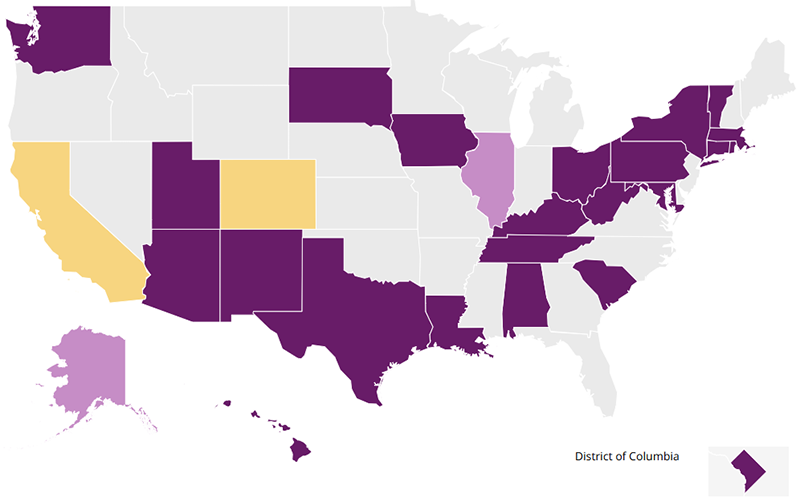
- “Is our SaaS or digital product taxable here?” Around twenty states tax SaaS, and they don’t do it the same way. Because so many of our international clients are software companies, this is often the first thing to sort out. Learn More
- “How do we register, and do we need a U.S. tax ID?” Registration is state by state, and a foreign seller often needs a U.S. tax ID to do it. We handle the practical hurdles. Learn More
- “We’ve been selling here a while and never dealt with this.” Exposure that built up before you understood the rules can be cleaned up on good terms. Learn More
- “It’s coming up in a deal with a U.S. buyer or investor.” U.S. sales tax is a common diligence question in cross-border deals. Learn More
Your Guide to the U.S. Side
Three things tend to matter most to the international companies we help. We handle the U.S. piece while your advisors at home keep the rest, so nothing falls between the two. We translate the U.S. system into plain terms, which for many foreign finance teams is the relief they were looking for. And because we’ve guided so many companies from outside the U.S. through exactly this, we know where foreign sellers most often get caught, and how to keep you out of it.

Success Story
An Overseas Company That Sorted Out the U.S.
A company headquartered abroad had been selling software to U.S. customers for a few years, treating it the way it treated VAT at home. When a U.S. investor asked about sales tax during a funding round, the company had no clear answer. We mapped where it had crossed economic-nexus thresholds, sorted out where its product was taxable state by state, handled the registrations, including the U.S. tax ID it needed, and remediated the back exposure, so it went into the round with a position it could stand behind.
Selling Into the U.S.?
Most international companies reach out once they suspect the U.S. is more complicated than they planned for, often after a customer, an investor, or an acquirer raises the question. That’s the right time to talk. A first conversation usually clarifies where you likely have obligations, what’s taxable, and what to do about anything that’s already built up.