
SaaS & Digital Taxability
For a software or AI company, the hard part of sales tax usually isn’t the rate. It’s that different states might view the same subscription product differently.
You sell one product. A state can decide it’s taxable software, or a non-taxable service, or a “data processing” or “information service” with its own separate rules, and the state next door can decide the opposite about the identical subscription. What a state calls your product ends up mattering more than what you call it, which is why the same SaaS offering can be fully taxed in one place, taxed at a fraction in another, and not taxed at all a state over.
Most companies start from the reasonable assumption that software is software everywhere. That single assumption is behind a large share of the exposure we end up helping SaaS and digital businesses sort out. Getting it right starts with something deceptively practical: understanding what your product actually does and how customers use it, because that’s what each state is really reacting to.
Related Ways We Help
- The SaaS Sales Tax by State Map - Learn More
- Multi-State Sales Tax Strategy - Learn More
- Sales Tax Software & Systems - Learn More
- Voluntary Disclosure & Back Taxes - Learn More
- M&A & Transaction Support - Learn More
- SaaS taxability concerns (When You Need Us) - Learn More
The Sales Tax Trap SaaS Companies Fall Into
Monika and Bill on the predictable pattern they see with software companies: they mean to stay compliant, then drift out of it as they grow. Where the taxability line sits, state by state, and how to get on the right side of it.
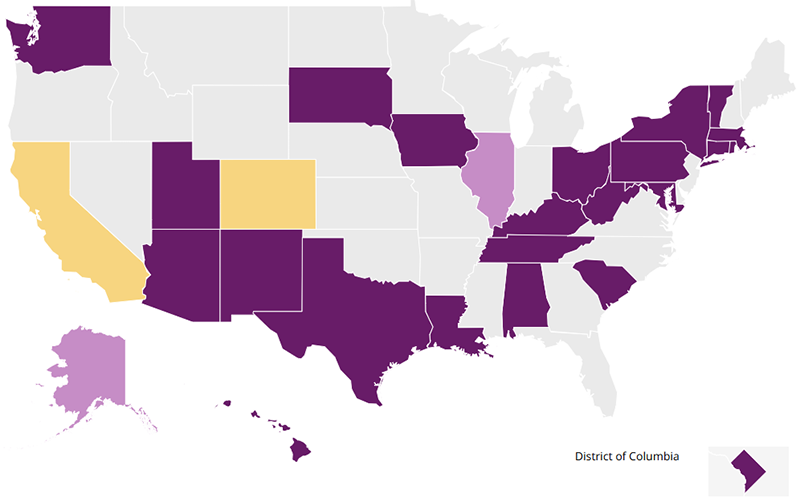
Start With the Map
Because the answer genuinely depends on the state, the most useful place to begin isn’t a paragraph, it’s the map. Our SaaS Sales Tax by State Map lays out how different states currently treat SaaS, cloud access, and digital products, so you can see where your customers sit and where the questions are likely to come from.
Over twenty states and some local jurisdictions apply sales tax to SaaS today, and they don’t do it the same way. States like New York, Pennsylvania, and Washington fold it into their general sales tax and tax it fairly broadly. Some tax only part of it: Texas, for instance, has historically taxed a portion of the value rather than the whole. Some apply a reduced rate, the way Connecticut has taxed certain digital services well below its standard rate. And many don’t tax SaaS at all. The result is that two identical contracts in two states can produce two completely different tax answers, with nothing different about your product.
These rules also keep moving. States continue to revisit how they treat cloud software and digital goods, so a position that was correct two years ago is worth a fresh look.
The Answer Moves When the Product Moves
The other thing that surprises growing software companies is that taxability isn’t fixed once you’ve figured it out. It can shift as your product evolves.
Add an implementation or onboarding service, bundle a digital download with the subscription, introduce a usage-based tier, or start selling a data feed alongside the platform, and you may have changed how several states view the sale, without anyone touching the tax setup. For a company shipping new functionality constantly, keeping the tax picture matched to the actual product becomes a live question rather than a one-time project.
That’s usually the moment a taxability question stops being one question. It starts connecting to where you have nexus, which returns need filing, whether prior years carry exposure, and what a buyer’s diligence team will eventually ask. Much of that traces back to economic nexus: the sales thresholds most states adopted after the Supreme Court’s 2018 Wayfair decision, which mean a stream of out-of-state customers can create an obligation even where you have no office and no employees. Companies working through that wider set of questions often find our Multi-State Sales Tax Strategy page helpful.
Software Helps, to a Point
Most SaaS companies run a tax engine (Avalara, Anrok, or a similar platform) and they should; it does real work across a lot of states. But it calculates from what it’s been told. If a product was mapped to the wrong category at implementation, or a bundle was set up before the offering changed, the system will keep producing confident, consistent, wrong answers until someone looks. The gaps tend to surface at the worst time: an audit, a diligence review, a year-end close.
This is the part that still needs human eyes, and it’s involved enough to have its own page. If software setup is your main concern, our Sales Tax Software & Systems page goes deeper.
Success Story
A SaaS Company That Caught It in Time
A fast-growing subscription platform came to us assuming its tax software had everything covered as it expanded across the country. A closer look found that several states viewed its product as taxable in ways the system had never been set up to handle. We worked through a state-by-state review, clarified where real exposure existed, and put a remediation plan in place, and the company moved forward with a tax position it could actually stand behind in front of an investor or an auditor.
Related Situations
Companies often land here in the middle of something larger: expanding into new states, hiring remote employees, getting ready for a sale or raise, finding exposure from prior years, or responding to a state notice that touches their software sales. You’ll find guidance written to those moments on our When You Need Us pages.
Questions SaaS Companies Commonly Ask
No. About half the states currently tax SaaS, and the rest generally don’t. Even among the states that tax it, the treatment differs: some tax it in full, some tax only a portion, and some apply a reduced rate. A few states don’t treat it as software at all, classifying it instead as a data or information service with separate rules.
Because states classify digital products differently, and classification drives the tax. How the product is delivered, how the contract describes it, and whether it’s bundled with services can each push a state toward a different answer. That’s why two states can reach opposite conclusions about an identical subscription.
Not necessarily. Automation handles the math well, but it depends on the inputs: how products are mapped, how customers are classified, and whether the setup still matches what you sell today. As the product evolves, those inputs need review, which is why software and human oversight work best together.
Not Sure Where Your Product Stands?
That’s the most common reason SaaS companies reach out, and it’s a good reason. A first conversation usually clears up three things: how the states you sell into are likely to treat your specific product, whether your current setup still matches what you actually sell, and what’s worth doing next. No pressure, and no assumption that something’s wrong, often it’s just the right time to check.